History is a story told in archetypes – mythical heroes embodying reality, pushing the project of humanity forward in enormous, world-shattering leaps. The archetypes of the warrior, embodied by Hercules and Achilles, and the King, embodied by Alexander, Caesar, and Charlemagne, capture our attention so dramatically because we recognize the transcendence – the sheer force of will that moves armies and mountains.Whereas many of these great men of history achieved their greatness with wine, coffee, and a little help from the gods, our modern era offers new tools.
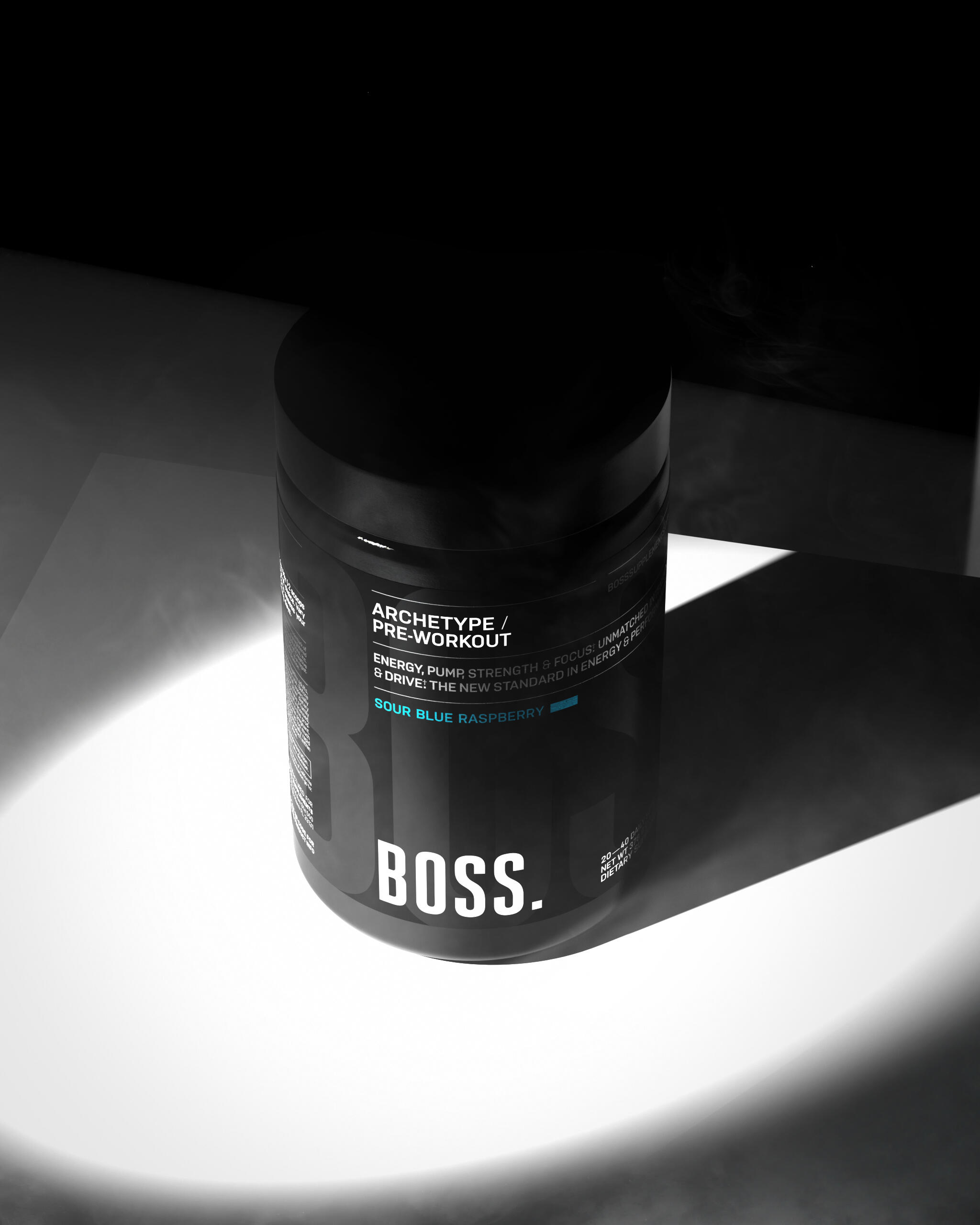
BOSS Archetype:
The New Standard of Pre-Workouts
Pre-workout supplements are meant to do one thing: to imbue you with the power and endurance required to perform at higher levels. Over the years, we've seen countless pre-workouts, and one thread runs through the teeming mass of products – they lose sight of the goal.Pre-workouts need not be complicated – in fact, simplicity is king. The perfect pre-workout is one that stimulates the highest degree of vitality with as little filler as possible. And we've made the decision to do it without crazy amounts of caffeine or beta-alanine. The beta-alanine tingles are popular for some, but they can be a distraction - and we're looking for acute training effects, right here, right now.This is why Archetype, the New Standard of pre-workout supplements, doesn’t include beta alanine. It's powerful enough on its own that it has no need for “the tingles” to convince you it’s transforming you into a machine.Archetype provides numerous research-supported ingredients -- in research supported doses -- to improve energy, power, and cognitive performance. It even supports muscle mass and body composition improvements. No nagging beta-alanine needed - we're here to set the new standard.
The Archetype Pre-Workout Formula:
Inside, we have 300 milligrams of caffeine in a full two-scoop serving, coming from two different sources. Here's how it works:
L-citrulline (4,000mg)
Archetype kicks the show off with 4 grams of L-citrulline, a significant dose to maximize the conversion to L-arginine and thereby enhance nitric oxide production,[1] resulting in substantial vasodilation, improved blood flow, enhanced nutrient delivery, and quicker recovery times.[2-5]Nitrosigine (1,500mg)
Nitrosigine is a patented, next-generation nitric oxide (NO) supporting ingredient. This compound was engineered to overcome the low bioavailability issues associated with standard L-arginine, which the body breaks down before it can be effective.[14-18] 1.5 grams of Nitrosigine has been shown to boost arginine levels in 30 minutes, lasting up to 6 hours.[19,20]From this, Nitrosigine supports improved blood flow[21,22] and can support cognition -- even after hard workouts.[23-25]L-Tyrosine (3,000mg)
L-tyrosine enhances the production of neurotransmitters such as dopamine and norepinephrine,[6] which boosts mental focus and alertness.Each serving of Archetype shifts your brain into a hyper-focused state, enhancing cognitive performance and resilience… even if you haven't had the best sleep.[7,8]Betaine Anhydrous (2,500mg)
Betaine supports the body's cellular resilience[9] and can combat heat shock,[10] enhancing overall performance. Not only does it increase lean mass gain, but it also promotes fat loss -- demonstrated in both men and women at this exact 2.5 gram dose.[11-13]L-Ornithine Hydrochloride (1,500mg)
Ornithine is an amino acid that helps remove ammonia, a metabolic waste that increases during exercise and leads to muscle fatigue,[19] thus potentially enhancing athletic endurance.[26,27] It also plays a role in supporting the body's biological processes for growth and recovery.[28]Caffeine Anhydrous (200mg of 300mg total)
Caffeine is a powerful stimulant known for its ability to cross the blood-brain barrier,[29] enhancing brain and central nervous system functions. It boosts mood, focus, and wakefulness by blocking adenosine receptors, thereby reducing fatigue and increasing energy by enhancing cellular metabolism.[30]Archetype has 200 milligrams of caffeine anhydrous, but there's another 100 milligrams coming:Dicaffeine Malate (100mg of 300mg total)
Even though caffeine is BOSS, a pre-workout named Archetype needs a bit more juice than just 200 milligrams -- so we added an extra 100 milligrams from Infinergy dicaffeine malate. This form of caffeine takes a touch longer for the body to break down, smoothing out the hit of energy it provides.Theacrine (as 40% TeaCrine yielding 50mg per 2 scoops)
Theacrine, featured in our formula as 40% TeaCrine to yield 50mg in a 2-scoop serving, is a naturally occurring compound, structurally similar to caffeine. This provides a long-lasting, unique edge by promoting energy, focus, and mood without overstimulation effects.Research indicates that theacrine activates pathways to stimulate and sustain motivation and reduce fatigue,[34-36] making it an ideal ingredient for prolonged workouts and cognitive tasks. Its effects build gradually and taper off smoothly, offering a perfectly-sustained release of energy and mental clarity to pair with caffeine.Theobromine (100mg)
We're not done with the energy yet: A chemical cousin of caffeine's, theobromine is a stimulant that works by inhibiting phosphodiesterase, an enzyme that breaks down cyclic AMP (cAMP),[31] supporting both mental and physical performance due to increased cAMP levels.It has a longer half-life than caffeine, working alongside the above Infinergy to alleviate concerns of the caffeine crash. Kings and Warriors like yourselves have no time for that, after all.Toothed Clubmoss (200mg) Huperzine A
Derived from Huperzia serrata, helps in the quest for cognition by inhibiting acetylcholinesterase, an enzyme that breaks down the neurotransmitter acetylcholine.[32] This process increases acetylcholine levels, a neurotransmitter that supports memory and cognitive functions.[33]AstraGin (50mg)
AstraGin is a patented blend of botanical extracts from ginseng and astragalus, known for enhancing digestion. It primarily works with intestinal cells, supporting nutrient absorption from food and supplements -- especially amino acids like L-citrulline.
Archetype: The New Standard for Pre-WorkoutsJust as history is woven through with archetypes, it's also driven by the cycle of rebirth and renewal. Civilizations rise and civilizations fall. In order to avoid the graveyard while reaching new heights, an empire — or a company — must continuously reinvent itself.BOSS Supplements understands this organizational imperative. Far from being the new kid on the block, we've built a solid foundation over ten incredible years in retail. We know what works, because we've been there on the ground floor with you the entire time. Complacency is not in our nature. We embrace rebirth. And we ask you to join us and embrace the new Archetype.We're excited to re-introduce ourselves. We come bearing The New Standard in the world of me-too fitness supplements. Archetype redefines what a pre-workout can be, ruthlessly prioritizing results over flash and showmanship. It’s a new fuel for a new kind of athlete.Archetype is here to change the game and elevate your training to new heights.
References1) Schwedhelm, Edzard et al.; “Pharmacokinetic and pharmacodynamic properties of oral L-citrulline and L-arginine: impact on nitric oxide metabolism.”; British journal of clinical pharmacology vol. 65,1 (2008): 51-9.; https://www.ncbi.nlm.nih.gov/pmc/articles/PMC2291275/2) Suzuki, Takashi, et al. “Oral L-Citrulline Supplementation Enhances Cycling Time Trial Performance in Healthy Trained Men: Double-Blind Randomized Placebo-Controlled 2-Way Crossover Study.” Journal of the International Society of Sports Nutrition, vol. 13, no. 1, 19 Feb. 2016, doi:10.1186/s12970-016-0117-z. https://www.ncbi.nlm.nih.gov/pmc/articles/PMC4759860/3) Trexler, Eric T., et al. “Acute Effects of Citrulline Supplementation on High-Intensity Strength and Power Performance: A Systematic Review and Meta-Analysis.” Sports Medicine, vol. 49, no. 5, 20 Mar. 2019, pp. 707–718, doi:10.1007/s40279-019-01091-z. https://pubmed.ncbi.nlm.nih.gov/30895562/4) Hickner RC. et. al.; Medicine and Science in Sports and Exercise; “L-citrulline reduces time to exhaustion and insulin response to a graded exercise test;” 2006; http://www.ncbi.nlm.nih.gov/pubmed/166799805) Rhim, Hye Chang, et al. “Effect of Citrulline on Post-Exercise Rating of Perceived Exertion, Muscle Soreness, and Blood Lactate Levels: A Systematic Review and Meta-Analysis.” Journal of Sport and Health Science, Feb. 2020, 10.1016/j.jshs.2020.02.003. https://www.sciencedirect.com/science/article/pii/S20952546203001686) Fernstrom, John D., and Madelyn H. Fernstrom. “Tyrosine, Phenylalanine, and Catecholamine Synthesis and Function in the Brain.” The Journal of Nutrition, vol. 137, no. 6, 1 June 2007, pp. 1539S1547S, doi:10.1093/jn/137.6.1539s. https://www.sciencedirect.com/science/article/pii/S00223166220927207) Attipoe, Selasi, et al. “Tyrosine for Mitigating Stress and Enhancing Performance in Healthy Adult Humans, a Rapid Evidence Assessment of the Literature.” Military Medicine, vol. 180, no. 7, July 2015, pp. 754–765, 10.7205/milmed-d-14-00594; https://academic.oup.com/milmed/article/180/7/754/41606258) Pomeroy, Diane E., et al. “A Systematic Review of the Effect of Dietary Supplements on Cognitive Performance in Healthy Young Adults and Military Personnel.” Nutrients, vol. 12, no. 2, 20 Feb. 2020, p. 545, 10.3390/nu12020545; https://www.ncbi.nlm.nih.gov/pmc/articles/PMC7071459/9) Boel De Paepe; “Osmolytes as Mediators of the Muscle Tissue’s Responses to Inflammation: Emerging Regulators of Myositis with Therapeutic Potential”; EMJ Rheumatol. 2017;4[1]:83-89; https://www.emjreviews.com/rheumatology/article/osmolytes-as-mediators-of-the-muscle-tissues-responses-to-inflammation-emerging-regulators-of-myositis-with-therapeutic-potential/10) Caldas, Teresa, et al. “Thermoprotection by Glycine Betaine and Choline.” Microbiology, vol. 145, no. 9, 1 Sept. 1999, pp. 2543–2548, 10.1099/00221287-145-9-2543; https://pubmed.ncbi.nlm.nih.gov/10517607/11) Cholewa, Jason M., et al. “Effects of betaine on body composition, performance, and homocysteine thiolactone.” Journal of the International Society of Sports Nutrition vol. 10,1 39. 22 Aug. 2013, doi:10.1186/1550-2783-10-39; https://www.ncbi.nlm.nih.gov/pmc/articles/PMC3844502/12) Cholewa, Jason M., et al. “Effects of Betaine on Performance and Body Composition: A Review of Recent Findings and Potential Mechanisms.” Amino Acids, vol. 46, no. 8, 24 Apr. 2014, pp. 1785–1793, 10.1007/s00726-014-1748-5; https://pubmed.ncbi.nlm.nih.gov/24760587/13) Cholewa, Jason M., et al; “The Effects of Chronic Betaine Supplementation on Body Composition and Performance in Collegiate Females: a Double-Blind, Randomized, Placebo Controlled Trial”; Journal of the International Society of Sports Nutrition; BioMed Central; 31 July 2018; https://jissn.biomedcentral.com/articles/10.1186/s12970-018-0243-x14) Castillo, L, et al. “Splanchnic Metabolism of Dietary Arginine in Relation to Nitric Oxide Synthesis in Normal Adult Man.” Proceedings of the National Academy of Sciences of the United States of America, vol. 90, no. 1, 1 Jan. 1993, pp. 193–197; https://www.ncbi.nlm.nih.gov/pmc/articles/PMC45626/15) Wu, Guoyao. “Intestinal Mucosal Amino Acid Catabolism.” The Journal of Nutrition, vol. 128, no. 8, 1 Aug. 1998, pp. 1249–1252, 10.1093/jn/128.8.1249; https://academic.oup.com/jn/article/128/8/1249/472272416) O’sullivan, D., et al. “Hepatic Zonation of the Catabolism of Arginine and Ornithine in the Perfused Rat Liver.” Biochemical Journal, vol. 330, no. Pt 2, 1 Mar. 1998, p. 627, 10.1042/bj3300627; https://www.ncbi.nlm.nih.gov/labs/pmc/articles/PMC1219183/17) van de Poll, Marcel CG, et al. “Interorgan Amino Acid Exchange in Humans: Consequences for Arginine and Citrulline Metabolism.” The American Journal of Clinical Nutrition, vol. 85, no. 1, 1 Jan. 2007, pp. 167–172, 10.1093/ajcn/85.1.167; https://pubmed.ncbi.nlm.nih.gov/17209193/18) Stamler, Jonathan S., and Gerhard Meissner. “Physiology of Nitric Oxide in Skeletal Muscle.” Physiological Reviews, vol. 81, no. 1, 1 Jan. 2001, pp. 209–237, 10.1152/physrev.2001.81.1.209; https://journals.physiology.org/doi/full/10.1152/physrev.2001.81.1.20919) Kalman, Douglas, et al. “A Clinical Evaluation to Determine the Safety, Pharmacokinetics, and Pharmacodynamics of an Inositol-Stabilized Arginine Silicate Dietary Supplement in Healthy Adult Males.” Clinical Pharmacology: Advances and Applications, Oct. 2015, p. 103, doi:10.2147/cpaa.s84206; https://www.ncbi.nlm.nih.gov/pmc/articles/PMC4603712/20) Komorowski, J., et al. Apr. 2016. “A Pharmacokinetic Evaluation of the Duration of Effect of Inositol- Stabilized Arginine Silicate and Arginine Hydrochloride in Healthy Adult Males.” The Journal of the Federation of American Societies for Experimental Biology vol. 30. https://www.fasebj.org/doi/abs/10.1096/fasebj.30.1_supplement.690.1721) Rogers, Jeffrey M et al. “Acute effects of Nitrosigine and citrulline malate on vasodilation in young adults.” Journal of the International Society of Sports Nutrition vol. 17,1 12. 24 Feb. 2020, doi:10.1186/s12970-020-00343-y; https://www.ncbi.nlm.nih.gov/pmc/articles/PMC7041093/22) Greenberg, Danielle, et al. “Inositol-Stabilized Arginine Silicate Reduces Exercise Induced Muscle Damage and Increases Perceived Energy.” Journal of Exercise and Nutrition, vol. 6, no. 1, 1 Mar. 2023, doi:10.53520/jen2023.103141; https://www.journalofexerciseandnutrition.com/index.php/JEN/article/view/14123) Evans, M. et al. July 2020. “Inositol-Stabilized Arginine Silicate Improves Post Exercise Cognitive Function in Recreationally Active, Healthy Males: A Randomized, Double-Blind, Placebo-Controlled Crossover Study.” Journal of Exercise and Nutrition vol. 3,3; https://www.journalofexerciseandnutrition.com/index.php/JEN/article/view/69 (full-text PDF, 2018 ISSN Poster Presentation, 2018 ISSN Conference Summary)24) Kalman, Douglas et al. “Randomized Prospective Double-Blind Studies to Evaluate the Cognitive Effects of Inositol-Stabilized Arginine Silicate in Healthy Physically Active Adults.” Nutrients vol. 8,11 736. 18 Nov. 2016, doi:10.3390/nu8110736; https://www.ncbi.nlm.nih.gov/pmc/articles/PMC5133120/ (2018 ISSN Summary, 2018 ISSN Poster Presentation)25) Gills, Joshua L., et al. “Acute Inositol-Stabilized Arginine Silicate Improves Cognitive Outcomes in Healthy Adults.” Nutrients, vol. 13, no. 12, 1 Dec. 2021, 10.3390/nu13124272; https://www.ncbi.nlm.nih.gov/labs/pmc/articles/PMC8703995/26) Wilkinson, Daniel J., et al. “Ammonia Metabolism, the Brain and Fatigue; Revisiting the Link.” Progress in Neurobiology, vol. 91, no. 3, July 2010, pp. 200–219, doi:10.1016/j.pneurobio.2010.01.012. https://linkinghub.elsevier.com/retrieve/pii/S0301-0082(10)00023-727) Chen, Shu, et al. “Involvement of Ammonia Metabolism in the Improvement of Endurance Performance by Tea Catechins in Mice.” Scientific Reports, vol. 10, no. 1, 8 Apr. 2020, 10.1038/s41598-020-63139-9; https://www.nature.com/articles/s41598-020-63139-928) Ho, Yee Yin, et al. “L-Ornithine Stimulates Growth Hormone Release in a Manner Dependent on the Ghrelin System.” Food & Function, vol. 8, no. 6, 23 June 2017, pp. 2110–2114, doi:10.1039/C7FO00309A. https://pubs.rsc.org/en/content/articlelanding/2017/FO/C7FO00309A29) Ikeda-Murakami, Kei, et al. “Central Nervous System Stimulants Limit Caffeine Transport at the Blood–Cerebrospinal Fluid Barrier.” International Journal of Molecular Sciences, vol. 23, no. 3, 7 Feb. 2022, p. 1862, doi:10.3390/ijms23031862. https://www.ncbi.nlm.nih.gov/pmc/articles/PMC8836437/30) Goldstein, Erica R, et al. “International Society of Sports Nutrition Position Stand: Caffeine and Performance.” Journal of the International Society of Sports Nutrition, vol. 7, no. 1, 2010, p. 5, doi:10.1186/1550-2783-7-5. https://www.tandfonline.com/doi/full/10.1186/1550-2783-7-531) Sugimoto, Naotoshi, et al. “Chronic Administration of Theobromine Inhibits MTOR Signal in Rats.” Basic & Clinical Pharmacology & Toxicology, vol. 124, no. 5, 12 Dec. 2018, pp. 575–581, 10.1111/bcpt.13175. https://onlinelibrary.wiley.com/doi/pdf/10.1111/bcpt.1317532) Zhao, Qin, and Xi Can Tang. “Effects of Huperzine a on Acetylcholinesterase Isoforms in Vitro: Comparison with Tacrine, Donepezil, Rivastigmine and Physostigmine.” European Journal of Pharmacology, vol. 455, no. 2-3, 29 Nov. 2002, pp. 101–107, 10.1016/s0014-2999(02)02589-x. https://pubmed.ncbi.nlm.nih.gov/12445575/33) Hasselmo, Michael E. “The Role of Acetylcholine in Learning and Memory.” Current Opinion in Neurobiology, vol. 16, no. 6, Dec. 2006, pp. 710–715, doi:10.1016/j.conb.2006.09.002. https://www.ncbi.nlm.nih.gov/pmc/articles/PMC2659740